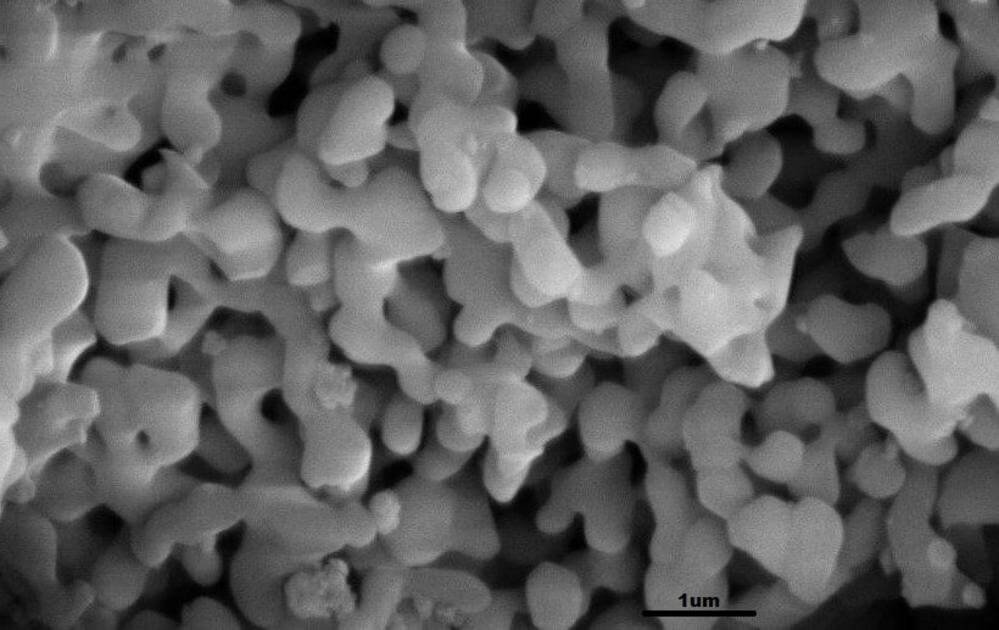
Nanostructured materials have become increasingly relevant to advanced manufacturing because their small particle dimensions can create distinctive surface and processing characteristics. Aluminum oxide is one inorganic material that can be produced in very fine particulate forms for specialized applications.
The behavior of these materials depends on particle size, surface area, morphology, purity, and dispersion. Understanding these factors helps engineers determine whether a nanoscale alumina material is appropriate for a particular formulation.
Read Also: Thermal Control in Modern Glass Bending Operations
What Makes Fine Alumina Different?
When particle dimensions become very small, the surface-area-to-volume ratio increases significantly.
This means that a greater proportion of the material is present at or near the particle surface.
As a result, surface interactions can become more important in coatings, polymers, ceramics, adhesives, and other composite systems.
The small particle dimensions can also create challenges related to agglomeration and handling.
Particle Size and Surface Area
Particle size is one of the first characteristics engineers should examine.
Smaller particles generally offer higher specific surface area, but this does not automatically mean that they will produce better results.
If particles strongly agglomerate during processing, the effective particle size within the formulation may become much larger.
Therefore, dispersion quality should be evaluated alongside the nominal particle size.
Dispersion in Liquid Systems
Uniform dispersion is essential for many applications.
The choice of solvent, mixing conditions, surface treatment, and addition sequence can influence how well fine alumina distributes throughout a liquid.
High-shear equipment may be appropriate for certain formulations, but processing conditions should be optimized experimentally.
Over-processing can also create unwanted heat or affect sensitive ingredients.
Use in Ceramic Processing
Aluminum oxide is widely used in ceramics because of its hardness, chemical stability, and thermal characteristics.
Fine particles can provide opportunities for developing controlled microstructures.
Engineers may evaluate particle packing, sintering behavior, purity, and final density during ceramic development.
The processing method should be matched to the desired final structure.
Coatings and Surface Materials
Fine alumina can also be considered for selected coating systems.
Potential areas of interest include surface hardness, abrasion resistance, thermal behavior, and physical reinforcement.
The exact result depends on the coating binder, particle loading, dispersion quality, and curing conditions.
A laboratory formulation should therefore be tested before commercial-scale use.
Polymer Composites
In polymer composites, inorganic particles can modify mechanical and thermal properties.
Fine aluminum oxide can be incorporated into certain polymer matrices where these characteristics are required.
However, strong particle-matrix interaction is important.
If the particles do not disperse effectively or interact poorly with the polymer, the expected benefits may not be achieved.
Adhesive Formulations
Adhesives sometimes contain inorganic fillers to adjust viscosity, strength, thermal behavior, or other properties.
Fine alumina may be evaluated as part of such systems.
Its suitability depends on adhesive chemistry and processing conditions.
Compatibility testing can help identify the appropriate concentration and mixing procedure.
Thermal and Electrical Applications
Aluminum oxide has useful insulating and thermally stable characteristics, making it relevant to some engineered material systems.
In fine particulate form, it can be considered where controlled filler distribution is required.
Engineers should evaluate thermal conductivity, electrical insulation, mechanical properties, and processing behavior together because changes in one area can influence another.
Selection Considerations
When evaluating a fine alumina product, manufacturers should examine:
- Particle size
- Surface area
- Purity
- Morphology
- Surface treatment
- Dispersion behavior
- Moisture content
- Compatibility
These specifications should be compared with the requirements of the final application.
Technical product information for aluminum oxide nanoparticles can be reviewed when investigating fine alumina options for industrial formulation development.
Handling Fine Powders
Fine particulate materials should be handled according to appropriate workplace procedures.
Manufacturers should follow supplier safety information and use suitable controls for dust management, storage, and material transfer.
Closed systems or appropriate ventilation may be useful in industrial environments depending on the process.
Frequently Asked Questions
1. Why are nanoscale alumina particles interesting?
Their small size provides a high surface-area-to-volume ratio, which can influence interactions with polymers, coatings, ceramics, and other materials.
2. Is smaller particle size always better?
No. Smaller particles can create dispersion and processing challenges. The appropriate particle size depends on the intended application.
3. Where can fine alumina be used?
Potential areas include ceramics, coatings, polymers, adhesives, composites, and specialized thermal or electrical material systems.
Conclusion
Fine aluminum oxide materials offer useful possibilities for advanced manufacturing, but their performance depends on more than particle size alone. Surface area, purity, morphology, dispersion, and compatibility all influence the final result.
Application-specific testing remains essential for determining the right material and processing conditions for a particular product.
