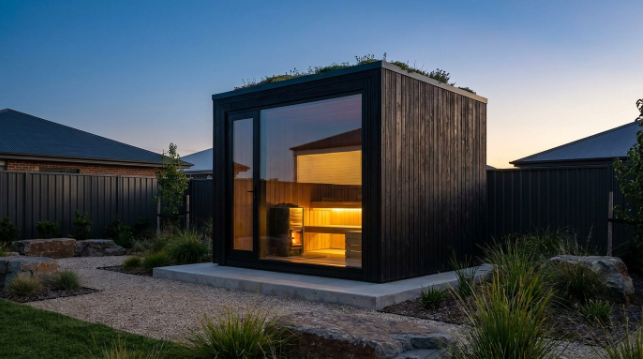
Running a 4-person electric cube sauna three to four times a week typically adds $15 to $30 to a monthly electric bill, based on a 6 kilowatt heater and a national average residential electricity rate near $0.16 per kilowatt-hour. The floor-to-ceiling glass front common to cube designs adds a small amount of extra heat loss compared with a fully solid-panel wall, but insulated tempered glass keeps that difference modest rather than dramatic.
The Short Answer: Typical Monthly Range
Most owners running a cube sauna a few times a week land between $12 and $35 a month in added electricity, depending on heater size, local rates, and climate. Below is a rough breakdown of where that number comes from and which line items move it up or down.
Line Item: Heater Electricity
- 6 kilowatt heater, 45-minute warm-up plus 60-minute session: roughly $1.10 per session at $0.16/kWh
- Three sessions a week, four weeks: approximately $13 to $14 a month
- Five sessions a week in a colder climate: approximately $22 to $25 a month
- Higher-rate regions ($0.28+/kWh): the same usage can run $25 to $45 a month
The kilowatt rating on the heater’s nameplate, not the cube’s square footage, is what actually drives this number, since a well-insulated 4-person cube with a properly sized heater cycles less than an undersized heater struggling to catch up.
Line Item: Glass Front Heat Loss
A defining feature of most cube saunas is a full-height insulated glass door and window panel across one face, which trades a small amount of thermal efficiency for natural light and an open feel that a solid-walled barrel or cabin does not offer. Double-pane tempered glass with a low-E coating keeps this loss modest, typically adding a dollar or two a month to the electric line item compared with an equivalent solid panel. Owners in colder climates sometimes notice the heater cycling slightly more often on windy days simply because the glass face has less mass to hold heat than the insulated wood-clad panels on the other three sides.
Line Item: Off-Season vs Peak-Season Use
Cube sauna running costs are not flat across the year. A unit used year-round in a cold-winter region costs more to heat in January than in July, since the heater has to fight a bigger gap between ambient outdoor temperature and the 170 to 190 degree target inside. Owners who cut back to one or two sessions a week in the coldest months, rather than maintaining a summer pace, typically see the monthly number drop closer to $8 to $15 even with a higher per-session cost from the wider temperature gap.
Line Item: Maintenance Costs That Aren’t Monthly But Add Up
A handful of costs are not part of the monthly electric bill but still belong in a full cost picture. Sauna stones lose efficiency and should be replaced roughly every one to two years, glass panels benefit from an occasional proper cleaning to avoid mineral buildup from steam, and exterior wood cladding on a cube’s frame typically needs a fresh coat of sealant or oil every two to three years depending on sun and weather exposure. None of these run more than a modest sum each time, but skipping them tends to shorten the unit’s working life more than any single month’s electric bill would. Shoppers comparing cube models against other configurations can see the full lineup before deciding which size and heater combination fits their planned usage.
Line Item: Regional Climate and Insulation Quality
Two cube saunas with identical heaters can post noticeably different monthly numbers depending on climate and how well the panel walls are sealed. A cube in a mild, dry region like the Pacific Northwest’s summer months loses heat slowly enough that the heater cycles infrequently once at temperature, keeping the monthly total near the low end of the range. The same unit in a windy, cold-winter region works harder to hold the same 170 to 190 degree target, especially around the glass front, and can land closer to the high end even at the same usage schedule. Panel seams and door gaskets matter here too: a cube with worn weatherstripping around the glass door loses heat continuously rather than only when the door opens, which shows up as a steadily climbing bill that has nothing to do with how often the sauna is actually used.
Checking the door seal and panel joints once a year, tightening any hardware that has loosened, and replacing a gasket that has gone flat are small maintenance steps that keep the electric line item from creeping upward over several seasons of ownership.
How Does a 4-Person Cube Compare to a Larger Model?
Interior cubic footage, not just the number of people a cube is rated for, drives the heater size and therefore the running cost. A compact 4-person cube in the 6 by 6 foot range typically pairs with a 6 kilowatt heater, while a larger 6-person cube with a bigger footprint and taller ceiling often steps up to 8 or 9 kilowatts to hold the same temperature range across more air volume. That larger heater draws more power per session, but the cost difference is usually smaller than people expect, often just a few extra dollars a month at the same usage frequency, since the bigger unit is not run any longer per session, just at a higher wattage. Buyers deciding between sizes should weigh the modest cost gap against how many people will actually use the cube at once, rather than assuming a bigger model automatically means a meaningfully bigger bill.
What a Full Month Looks Like Added Up
Putting the line items together for a typical household running a 4-person cube three times a week with a 6 kilowatt heater: roughly $13 to $14 in heater electricity, a dollar or two more for glass front heat loss in cooler months, and effectively nothing extra if the door seal and panels are properly maintained. That puts a realistic monthly total closer to $15 to $20 for most of the year, moving up toward $30 during the coldest weeks of winter in a colder climate, and down toward $10 to $12 during a mild summer stretch. These are estimates built from typical heater wattage and average utility rates rather than a guarantee for any specific home, since local electricity prices vary enough on their own to shift the final number by a wide margin.
Frequently Asked Questions
How much electricity does a cube sauna use per month? For three to four sessions a week with a 6 kilowatt heater at a national average rate, expect roughly $15 to $30 added to the monthly bill.
Does the glass front on a cube sauna raise the electric bill? Slightly. Insulated glass loses a bit more heat than a solid wall panel, though double-pane tempered glass keeps the difference small.
Is a cube sauna cheaper to run than a barrel sauna? The two are close for similarly sized heaters. Cost differences usually come from heater wattage and session frequency rather than the shape itself.
What other costs come with owning a cube sauna beyond electricity? Budget for occasional stone replacement, glass cleaning, and exterior wood treatment every couple of years, none of which are monthly costs but still add up.
References
- Cardiovascular and Other Health Benefits of Sauna Bathing: A Review of the Evidence, Mayo Clinic Proceedings, 2018
- Clinical Effects of Regular Dry Sauna Bathing: A Systematic Review, Evidence-Based Complementary and Alternative Medicine, 2018
- Does the Combination of Finnish Sauna Bathing and Other Lifestyle Factors Confer Additional Health Benefits? A Review of the Evidence, Mayo Clinic Proceedings, 2023
By Priya Sekhon
