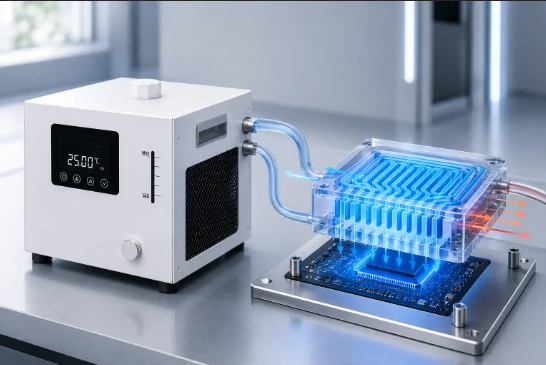
Laboratory efficiency depends on many factors, including workflow design, equipment selection, workspace organization, and staff procedures. Environmental testing can become more efficient when laboratories use equipment that fits their testing needs without unnecessarily occupying valuable space.
LIB industry desktop thermal chambers can be relevant for laboratories working with smaller samples and controlled temperature applications. The selection process should focus on how the equipment fits into the complete research workflow.
The Role of Environmental Equipment
Environmental chambers create controlled conditions for testing products and materials.
Rather than waiting for natural environmental changes, researchers can establish specific conditions and observe how samples respond.
This controlled approach can support research, development, quality control, and product evaluation.
See also: How Byju’s, Unacademy, and Khan Academy Built Their Tech: Platform Lessons for EdTech Builders
Compact Design and Workspace
One advantage of desktop equipment is its ability to fit into a laboratory workstation environment.
Space-efficient equipment can allow laboratories to maintain room for other instruments, preparation areas, and storage.
However, compact design should always be considered alongside internal chamber capacity and technical performance.
Match Capacity to the Application
The correct chamber capacity depends on the samples.
Laboratories should measure the products or components they expect to test and determine how much internal space is required.
If multiple samples are tested simultaneously, the arrangement should also allow suitable environmental circulation.
Temperature Performance
Temperature performance is central to environmental testing.
Users should examine the operating range, stability, and uniformity of the chamber.
The appropriate specifications depend on the testing objective. A research project requiring a narrow temperature range may have different requirements from a program involving broader temperature cycling.
Supporting Research and Development
Controlled temperature testing can support product development by providing information about how components behave under selected environmental conditions.
Engineers can use these observations during prototype evaluation and design refinement.
Testing can also help compare different materials or components using consistent conditions.
Quality-Control Applications
Manufacturers may use environmental testing as part of quality-control programs.
Testing selected samples under controlled conditions can provide information about product performance and consistency.
The exact procedure should follow the organization’s quality requirements and applicable standards.
User-Friendly Controls
Equipment should be practical for technicians who use it regularly.
Clear controls and accessible operating functions can make routine testing easier.
Users should also review the available documentation and determine whether it supports their laboratory procedures.
Data and Documentation
Environmental testing often requires detailed documentation.
Researchers should record test parameters and relevant observations. Depending on the application, automated data recording may also be useful.
Maintaining complete records can support traceability and make later analysis easier.
Maintenance and Equipment Life
Routine maintenance is part of responsible laboratory equipment management.
Cleaning, inspection, calibration, and servicing should be performed as recommended.
Laboratory managers should also maintain records of maintenance and repairs.
When considering LIB industry desktop thermal chambers users should review not only environmental performance but also maintenance and operational requirements.
Installation and Ventilation
Even a compact chamber requires appropriate installation.
The laboratory should provide a suitable electrical supply and ambient environment. Required clearance and ventilation should be maintained.
Equipment should not be installed in a location that makes normal operation or servicing difficult.
Training and Standardization
If multiple technicians use the same equipment, standardized procedures can help reduce inconsistencies.
Training should explain how to program test conditions, load samples, monitor operation, clean the chamber, and complete test documentation.
Clear procedures are particularly useful when environmental testing is repeated regularly.
Planning for Future Use
Laboratories should consider whether the equipment can support likely future projects.
A chamber that meets today’s requirements may be less useful if sample sizes or temperature requirements change substantially.
At the same time, excessive capacity may not provide practical value if it is rarely needed.
Frequently Asked Questions
1. What are desktop environmental chambers useful for?
They can provide controlled temperature conditions for smaller samples and laboratory-scale research, development, and testing.
2. Does compact equipment require special installation?
Installation requirements vary by model. Electrical supply, clearance, ventilation, and operating conditions should be confirmed using the manufacturer’s instructions.
3. How can laboratories improve testing efficiency?
Clear procedures, appropriate equipment placement, trained staff, proper maintenance, and consistent documentation can all contribute to a more efficient workflow.
Conclusion
Compact environmental testing equipment can help laboratories balance testing capabilities with limited workspace. However, efficient operation depends on selecting equipment that matches the application and integrating it into a well-planned workflow.
By considering capacity, temperature performance, controls, maintenance, installation, documentation, and future needs, laboratories can build a testing environment that supports research and quality-control activities efficiently.
